Wednesday, March 21, 2018

SPRING BREAK FRIES - THE AIOLI METHOD

Hello everyone,

Perhaps you prefer to track your practice according to "things accomplished" rather than "allotted time finished?" - - Human nature being what it is, I sometimes have to force myself to put in work every day. When I'm feeling like that, or when other things encroach upon practice time, I prefer the time-management method, which ensures that I am sitting at the keyboard EVERY DAY.

Other times, I like to simply set a goal - a daily goal for each piece - and then put in as much time and effort as is necessary in order to accomplish that goal. This might be a daily goal or even a weekly goal.

EXAMPLE:
My previous post detailed the "time" method - determining tasks, estimating time to completion, setting daily time quota, and going for it.

The "task" method assumes a greater level of self-discipline than the "time" method - no one method is the only one to use - - tailor your own strategy according to the degree of self-knowledge you possess :-)

I've done both, honestly - and I don't prefer one over the other - - the right tool for the right job!

I have also done set a practice goal for a session and then tracked how quickly I was able to accomplish it! I call that method "short-order cooking" -- if one knows HOW to practice efficiently, it is incredibly effective.

Whatever method/s you decide to employ, please consider making this a non-negotiable declaration of purpose:

I WILL KEEP MY CONCERT MUSIC IN MY MIND, HEART AND SOUL EVERY SINGLE DAY, WHETHER OR NOT I AM ACTIVELY WORKING ON IT.

In musical solidarity,
Lee

SPRING BREAK FRIES 2018

Fries...as in, would you like catch-up with that?!
--
As we are all (uncomfortably?? joyfully? warily?) aware, once we all return from hiatus, Spring Concert weekend preparations will go into transwarp. Here are some suggestions that may help you prepare for this looming eventuality :-)

1. Determine exactly what you need to accomplish.
There is one more piece to learn for the spring concert - the piece I'm writing for the choirs. It's not difficult, but it is easy only if you know everything else. Otherwise, we'll all be scrambling.
If I finish the piece during the hiatus, I'll post PDF of the score AND the voice parts at Dropbox and ask Doc to email everyone with an announcement.
Okay.
So - determine exactly what you need to accomplish.
For this, you'll need a pack of sticky notes and your music.
First:
On one sticky note, write the title of the piece.
Beneath that, rate your own performance of your part on a scale from 1 to 10.
Your objective is to be at no less than a "9" rating, come the first week of April.
Beneath your rating, jot down what you need to know or do in order to get up to "9." Use more sticky notes if necessary - this is IMPORTANT.
Then! - estimate how much practice time it will take in order to achieve your goal with the piece. Listening and singing along with choral recordings DO count as practice.

Do this for each piece.
Add up your time estimates.
Voila, that's how much practice time you will need to put in before classes resume. Record this time in minutes.
NOW - how many days do you have? If you're going out of town and you /know/ you won't really have any time to practice, don't count those days! (However, you can always listen to the music! AND guess what - you can scan the scores into your smartphone, if you have one - and no danger of losing scores or having to haul around hard copies.
Divide the amount of practice time (in minutes) by the number of days you KNOW you'll //make// time to practice and study your music.
Voila - there's your daily quota.

One more thing - - Human nature being what it is, you will need to reward yourself at every stage of this project. Write a little Schedule of Rewards - one reward for each day of practice! I'm not talking diamond rings or $5000 coffee cards here - I'm talking /small/ things: perhaps a Hershey's Kiss candy or $1 put into your Rewards account - splurge at a later time.
------------------
SAMPLE
Sticky note for "See the chariot" - soprano
Mastery Rating: 6 - Goal: 9
Need to: make sure all pitches are correct / know exact location of cut-offs, review pitches and diction in mm. xx through xx / be able to sing straight through with choral recording, no mistakes
Amt of time necessary to attain this: 70 minutes (45 minutes of voice work, 15 minutes of listening to CR, 10 minutes of score study / checking markings, etc.)

Similar sticky notes for other pieces
Total practice time needed: 200 minutes (8 pieces)
Number of practice days in hiatus: 11
Daily practice quota: 20 minutes a day - this will exceed goal by 20 minutes!!

See? EASY!

Y'all, this is how I plan piano practice for all sorts of things -
I survey the task.
I determine exactly what needs to be accomplished
I estimate the amount of time necessary to accomplish the goal.
I add all of my estimates and divide the total number by the number of practice days.
That's my daily goal.
Rewards: Remind me to show you my "Kreutzer" and "Solo Recital" jewelry. I allotted myself 1 safety pin for each hour of practice completed and then strung the pins onto cords, forming tasteful and meaningful necklaces.

Have a wonderful hiatus - accomplish all the things - see you in April!

In musical solidarity,
Lee

PS. I'll be posting little gems about more of our concert repertoire during the hiatus - do check here occasionally for the updates.

Monday, March 19, 2018

MAKING THE MOST FROM SPRING BREAK 2018!!

Hello everyone,
Please stay tuned for a big detailed post - I'll be talking about spring break and ways to leverage that "free time" into wonderful musical accomplishments!
I had planned to post tonight, but am not quite done organizing my thoughts.
The post /will/ appear sometime tomorrow (Tuesday March 20th) - so, STAY TUNED!!!

In the meantime, enjoy these video clips of wonderful pianists born on March 20th.


Tuesday, February 13, 2018

Visio Divina - accompanying post for the "Crucifixus" post

Here is information on "visio divina" - informed seeing - to accompany the post I just uploaded regarding Lotti's "Crucifixus."

I highly recommend this procedure as a way of SEEING the unseen reality represented by the artwork I referenced in the "Crucifixus" post a few minutes ago.

I will add that the core concepts of 'lectio divina' are not proprietary - no one group owns or enforces them. I have used similar techniques of Seeing in ///very/// different contexts and found them extremely helpful and enlightening.
Your personal belief system and referents may be different than those mentioned in the article I've linked here. Take what works for you.


http://www.patheos.com/resources/additional-resources/2009/07/praying-with-art-visio-divina

In musical solidarity,
Lee


Crucifixus

What is crucifixion?
This is a very long article, but I believe it is important that EVERY ONE OF US understand the material therein. 
Please also remember that Lotti's composition comes from a time when human life was shorter, nastier, and more brutish than most of us today can conceive. The reality of torture, unjust condemnation, horrific physical punishments and execution methods was but a rulership or territorial / religious squabble away.

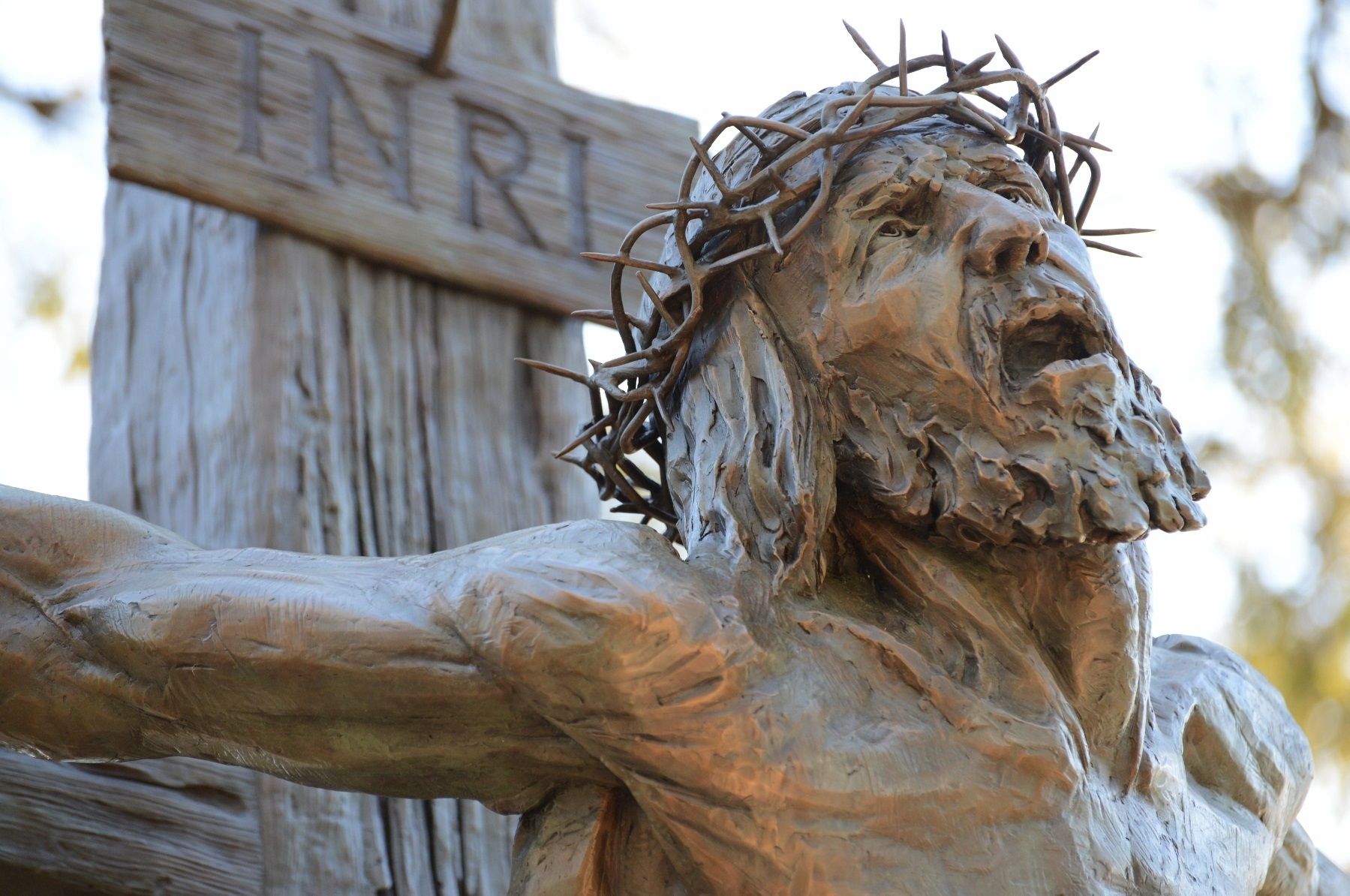
Paintings - Personally, I favor crucifixions painted by Spanish artists - but there are literally millions of paintings and sculptures to choose from. I suggest that you locate an image, enlarge it as much as possible (use the computer for this, not the cell phone, for best effect) - and then examine it closely and let its power permeate your understanding - WITH THE CHORAL RECORDING PLAYING AS YOU LOOK AT THE ARTWORK.

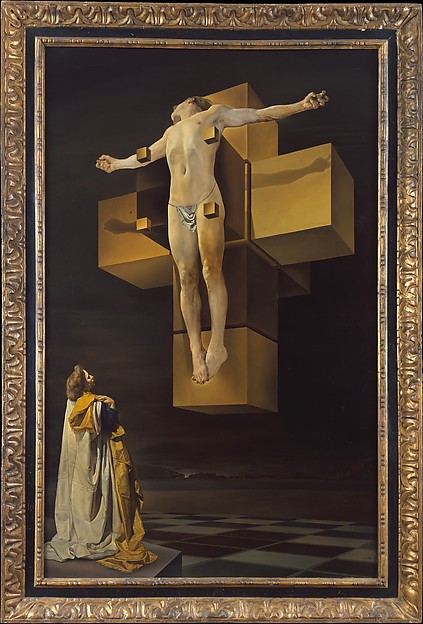
Of all the crucifixion paintings I have viewed, two stand out in my mind, both by the same artist. Of course, my context for viewing the paintings is heavily informed by the faith tradition I most recently identified with and practiced. Your mileage may vary.


Corpus Hypercubus, by Salvador Dali

Christ of Saint John of the Cross, also by Dali

This is one artist's conception of the aftermath of the crucifixion of Christ:

descent from the cross  - Rubens

Sculpture

Pieta – Michelangelo

 burial procession

“et sepultus est.”

"Crucifixus" - Antonio Lotti - Cambridge Singers


In musical solidarity,
Lee

Monday, January 29, 2018

About the Music: None Other Lamb, River in Judea, Crucifixus,

NONE OTHER LAMB
Poem by Christina Rossetti
Musical setting by Craig Courtney

A link to 320 of Rossetti's poems - have a look around!

About the poet - she had an /amazing!!!/ life!
https://en.wikipedia.org/wiki/Christina_Rossetti

I will say that my favorite CR work is "Goblin Market" - read it aloud, expressively!
https://www.poetryfoundation.org/poems/44996/goblin-market

The poem was set to music by Craig Courtney - composer of "How Great Our Joy" and many other fine pieces <3
https://www.lorenz.com/more-information/meet-our-composers/composers?itemId=Composer:697

-------------------
RIVER IN JUDEA (TTBB) - by Linda Marcus & Jack Feldman, arr. John Leavitt
This is one of Fr. Sundborg's favorite TTBB pieces - he asks for it by name!!

From Shawnee's website - (the publisher)

River in Judea

Series: Shawnee Press 
Publisher: Shawnee Press
SAB
Composers: Linda Marcus, Jack Feldman
Arranger: John Leavitt
An all-star writing team created this beautiful gospel-style song based on a secular text spun from the river-is-life metaphor. River in Judea is suitable for virtually any performance. Perfect for graduation.
About Jack Feldman: 
https://en.wikipedia.org/wiki/Jack_Feldman_(songwriter)

About Linda Marcus: 
https://www.lorenz.com/more-information/meet-our-composers/composers?itemId=Composer:133

About John Leavitt, who arranged this piece for TTBB chorus:

"River-as-life" metaphor - - - Uncle GOOGLE had way TMI for me - here are a couple of places - 


And, if you are a member of Cantemus - - there's this Emerson poem set by Nancy Cobb...!!!!

-----------------------

CRUCIFIXUS - by Antonio Lotti
About the text - - 
The text is a phrase in the Credo, which is part of the Ordinary of the Mass.
What's a "Credo" - ? Have a look here: 
https://en.wikipedia.org/wiki/Credo

Texts for the Ordinary (unchanging) part of the Mass, in both English and (YES!!!!) Latin.

About Antonio Lotti:

I saw something interesting (taken from the Wikipedia article) - 
"Lotti is thought to have influenced Johann Sebastian BachGeorge Frideric Handel, and Jan Dismas Zelenka, all of whom had copies of Lotti's mass, the Missa Sapientiae.

...so I looked around a bit further, and found this! Here's a link to another article about Lotti, which goes further into the "Bach Connection":

And, an image! I don't know about you, but I like to know what people LOOK LIKE!


Thursday, January 18, 2018

A LOT OF GOOD INFORMATION about Next Week's Guest - Dr. Ben Bernstein!!!

Hello everyone,
We will be honored with a working visit from renowned performance psychologist, composer and coach, Dr. Ben Bernstein.

Ben Bernstein's website - take some time to look around, it is a fascinating place!!
http://www.drbperformancecoach.com/

Specific info about Dr. Ben!

Here is a vimeo link to Ben's one-act opera, "The Man in the Mirror," which was performed right here a few years ago - starring Ross Hauck!!!

Here's a wonderful link to more of Ben Bernstein's work - plenty of links to check out! Read about "Singers Gym" while you're at it :-)

THE SCHEDULE

Ben will be here on Wednesday and Thursday, January 24 and 25.
He will be working with our various choral permutations and with individual singers in a masterclass setting.

I'll ask Doc to publicize the time of the masterclass session - it's always wonderful to perform for an audience, and there's this thing called

VICARIOUS.
LEARNING.

Stay tuned!


In musical solidarity,
Lee